Sonoran desert conditions drive moisture-seeking insects indoors when summer ambient temperatures exceed 110 degrees Fahrenheit or when July monsoon humidity pushes exterior relative humidity above 50 percent.…
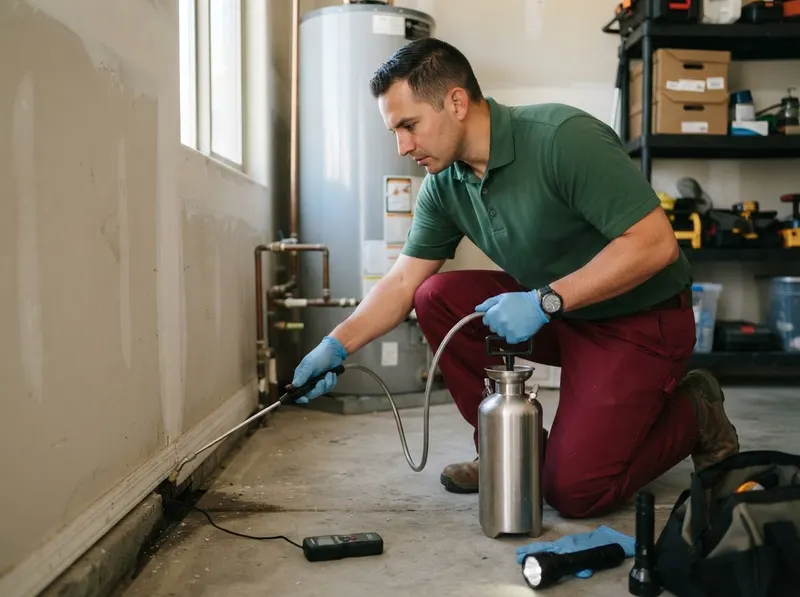
Sonoran desert conditions drive moisture-seeking insects indoors when summer ambient temperatures exceed 110 degrees Fahrenheit or when July monsoon humidity pushes exterior relative humidity above 50 percent. Silverfish (Lepisma saccharinum) and firebrats target high-cellulose materials, consuming wallpaper paste, library archives, linen fibers, and dry pantry proteins. In historic red-brick properties throughout the Willo Historic District and Encanto Village, older cast-iron or galvanized plumbing voids create micro-condensation zones inside bathroom lath-and-plaster walls. Modern construction across Desert Ridge and Ahwatukee Foothills faces a different structural pattern: unsealed utility penetrations beneath composite kitchen islands and laundry standpipes allow subterranean springtails and silverfish to migrate directly from saturated slab foundations into living quarters.
Effective remediation differs fundamentally from general retail bug sprays, which break down rapidly in desert heat and fail to penetrate structural harborages. A targeted remediation protocol focuses on three physical stages: First, dry inorganic desiccant dusts, such as laboratory-grade amorphous silica gel, are precisely injected into hollow baseboards, electrical outlet chases, and drop-ceiling spaces behind bathroom fixtures. Second, structural technicians treat crawlspaces, dark attic insulation baffles, and block-wall foundations bordering irrigated yards in Arcadia and North Central Phoenix to stop exterior ingress. Third, corrective mechanical advice pinpoints slow sewer drain weeping, uninsulated HVAC condensation lines, and leaking irrigation valves near exterior stucco. Once these treated zones dry, residual deposits remain active for up to 90 days without vaporizing into family living zones.
Choosing targeted remediation over recurring monthly maintenance spray depends entirely on the infestation source. If pests cluster strictly around plumbing fixtures, baseboards, or ceiling insulation, isolated remediation resolves the harborage without requiring ongoing chemical contracts. However, if unsealed expansion joints or exterior landscaping deliver continuous pest pressure alongside scorpions, an integrated perimeter barrier serves better long-term. Remediation carries the trade-off of requiring physical preparation: homeowners must clear sub-sink cabinets, pull items 12 inches away from closet baseboards, and resolve standing leaks to secure permanent eradication.
Every job gets a firm, written price after a free on-site visit.
Tell us about your silverfish and moisture pest remediation job in Phoenix and we'll send a clear, written quote, usually the same day.
 Copper Cactus Pest Control