Securing a residential property requires an experienced pest control service Phoenix technicians configure specifically for severe Sonoran climate conditions and desert wildlife pressures. Standard superficial perimeter sprays deteriorate rapidly when exposed to continuous 115-degree ground surface temperatures and violent monsoon moisture flushes across Maricopa County.
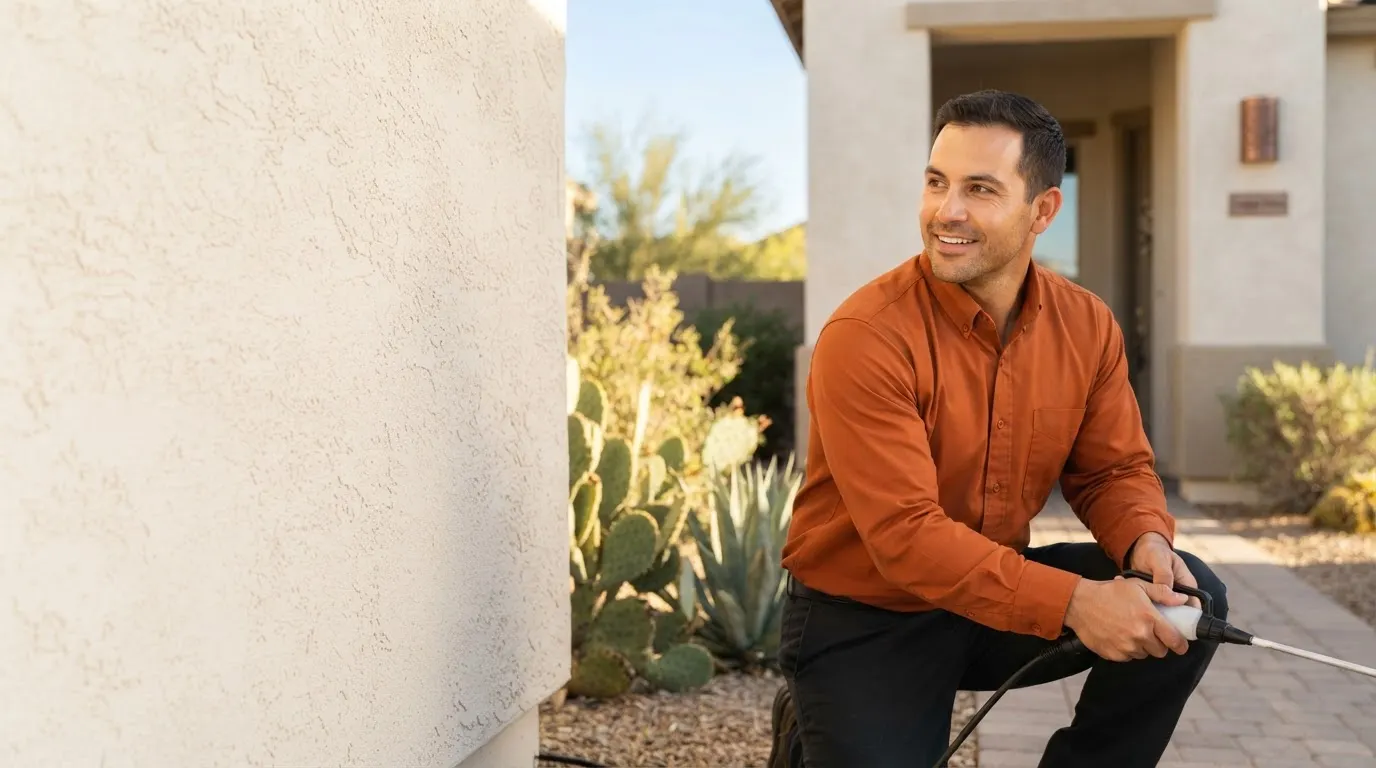
Pest Control Service in Phoenix is an objective, specialized structural treatment and perimeter defense protocol engineered to detect, eliminate, and physically exclude target Sonoran desert arthropods, subterranean wood-destroying organisms, and urban pests from residential and commercial structures.
Every service reflects the same meticulous attention to detail, whether it's a single job or a larger pest control service project across Phoenix.
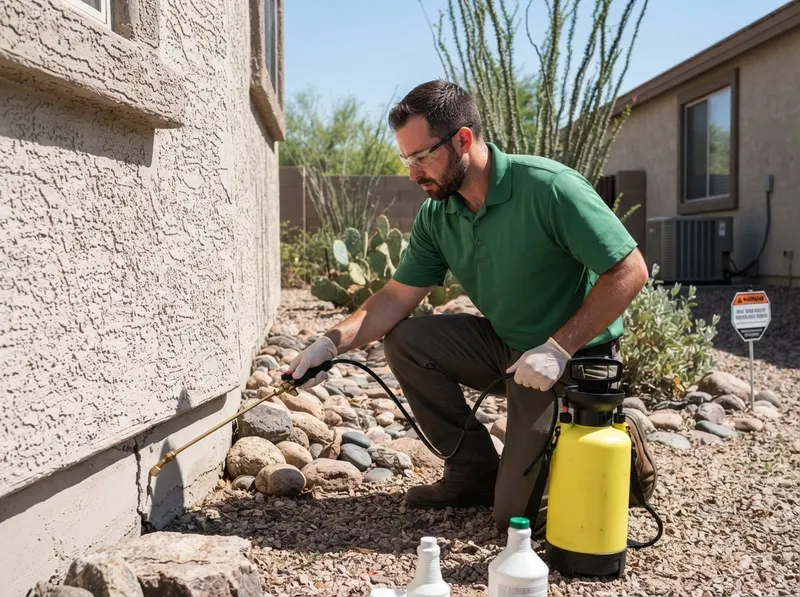
Sonoran bark scorpions (Centruroides sculpturatus) exploit micro-fissures in block perimeter walls, foundation expansion joints, and open stucco weep screeds as narrow as one-sixteenth of an inch to escape ambient desert surface temperatures exceeding 110 degrees. Standard pyrethroid insecticides frequently fail to control these arachnids because scorpions elevate their bodies on claw-tipped tarsi, minimizing contact with surface films, while their dense chitinous cuticles prevent rapid chemical absorption. This corrective service integrates systematic high-output ultraviolet night inspection to map localized outdoor populations, specialized microencapsulated formulations that bond firmly to porous concrete and dry block masonry without breaking down under ultraviolet radiation, targeted silica aerogel dust injections into interior wall voids, and the mechanical installation of precision-cut copper mesh and elastomeric sealants along weeping stem walls, exterior hose bibbs, and air-conditioning conduit penetrations.
Get a quote →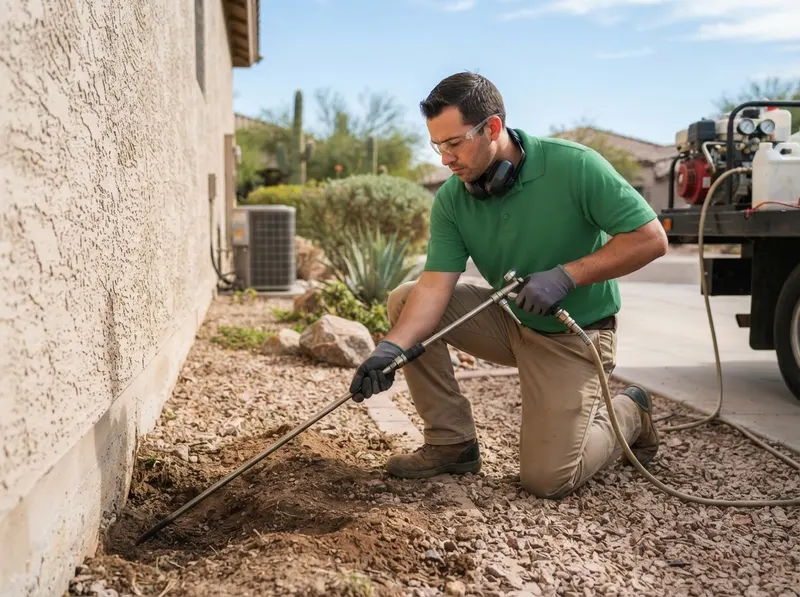
Heterotermes aureus and desert subterranean termites live deep within Maricopa County caliche soil layers and construct protective earthen shelter tubes upward over foundation stem walls, plumbing drops, and concrete expansion joints to feed on structural pine framing members. Left unaddressed, these wood-destroying insects hollow out structural wall studs, floor plates, and roof trusses from the inside out, leaving drywall paper sheets supported by structural mud. Control operations require establishing a continuous chemical defense zone around the entire exterior foundation perimeter through deep trenching measuring six inches wide by six inches deep, backed by rotary hammer drilling through attached concrete slabs, patios, and garage aprons at precise twelve-inch intervals. High-volume non-repellent liquid termiticides are injected into the soil at calibrated label rates of four finished gallons per ten linear feet, enabling foraging worker termites to transfer the active agent throughout the subterranean colony hierarchy down to the reproductive queens.
Get a quote →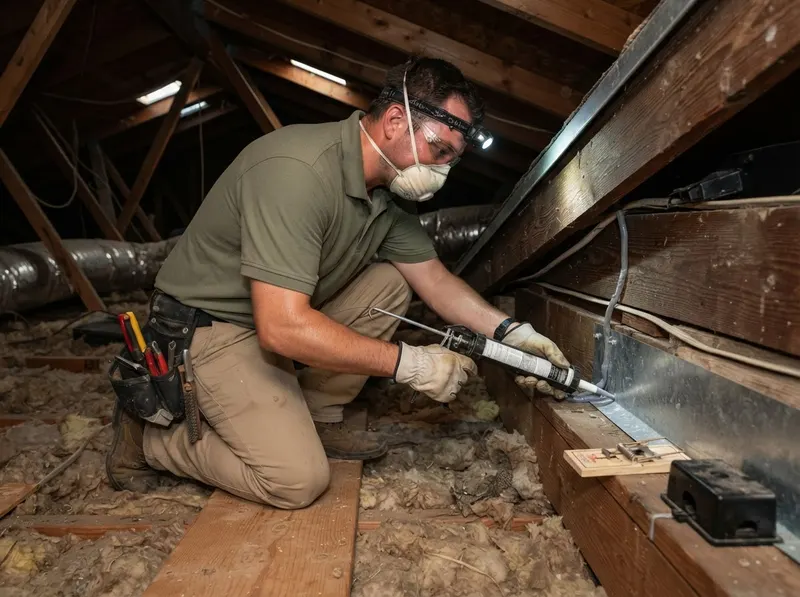
Valley of the Sun residential properties featuring mature citrus groves, oleander hedgerows, and untrimmed fan palms face relentless foraging pressure from roof rats (Rattus rattus), which utilize overhead utility lines and overhanging branches as primary structural runways. These agile rodents exploit attic ventilation openings, Spanish tile gaps along roof eaves, and dormant cooling duct joints to establish insulated nesting harborage within fiberglass insulation blankets, frequently gnawing on electrical wiring and contaminated water lines. Eradication utilizes a two-phase protocol: certified technicians deploy high-density arrays of expanded-trigger mechanical snap traps along confirmed attic structural runs without placing loose toxic rodenticides in ceiling cavities where carcasses decay, followed by complete structural exterior exclusion utilizing heavy 19-gauge galvanized quarter-inch steel hardware cloth, custom sheet-metal flashing, and elastomeric sealants over all dormer vents, plumbing pipe jacks, and tile roof caps.
Get a quote →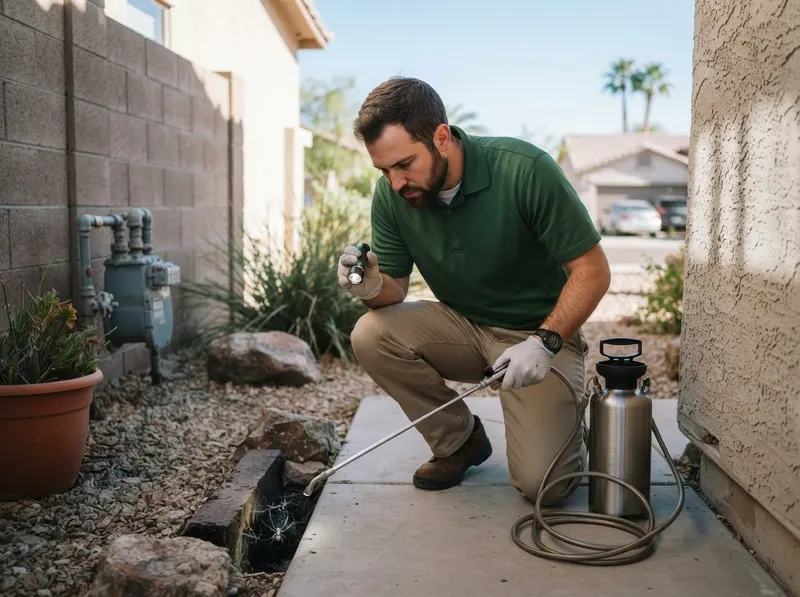
Western black widow spiders (Latrodectus hesperus) and desert recluse variants naturally inhabit exterior irrigation valve boxes, block-wall expansion joints, pool pump housings, and unlit garage perimeters where desert crickets and outdoor beetles provide a constant food supply. Female black widows build disorganized webs featuring tensile-strength silk anchored near ground level, depositing multiple egg sacs that hatch hundreds of spiderlings each spring. The eradication procedure involves comprehensive structural de-webbing using specialized electrostatic brushing tools to physically destroy adult spiders, egg cases, and structural webs, paired with deep hydrophobic dust applications delivered into unsealed cinder block cores, electric meter base cavities, and void spaces beneath patio expansion joints. An exterior non-repellent microencapsulated perimeter band is applied concurrently around exterior baseboards and door thresholds to eliminate secondary prey insect populations that attract predatory arachnids.
Get a quote →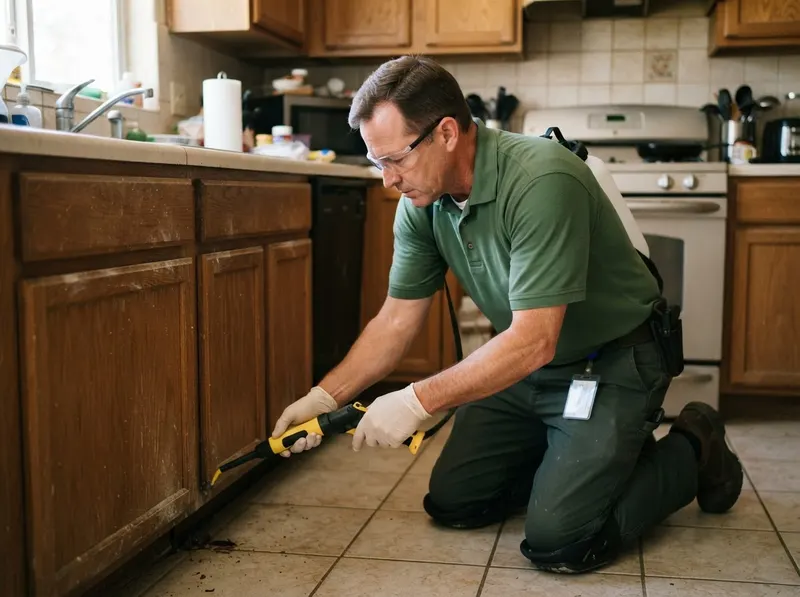
American cockroaches (Periplaneta americana), locally designated sewer roaches, breed in municipal sewer mains and storm drainage networks, erupting through dried floor drains, shower traps, and outdoor cleanout ports following high-moisture monsoon weather flushes, while German cockroaches (Blattella germanica) reproduce inside interior residential kitchens, commercial pantries, and behind heat-generating motor compartments of dishwashers and refrigerators. Eradication measures deploy an integrated strategy combining bio-enzymatic drain foaming that breaks down the organic slime layers harboring American roach nymphs, with precise micro-droplet applications of synthetic gel baits and juvenile insect growth regulators (IGRs) for German cockroach infestations. These growth regulators disrupt chitin synthesis and prevent surviving nymphs from molting into sexually mature adults, successfully collapsing multi-generational roach harborages without relying on broad aerosol sprays.
Get a quote →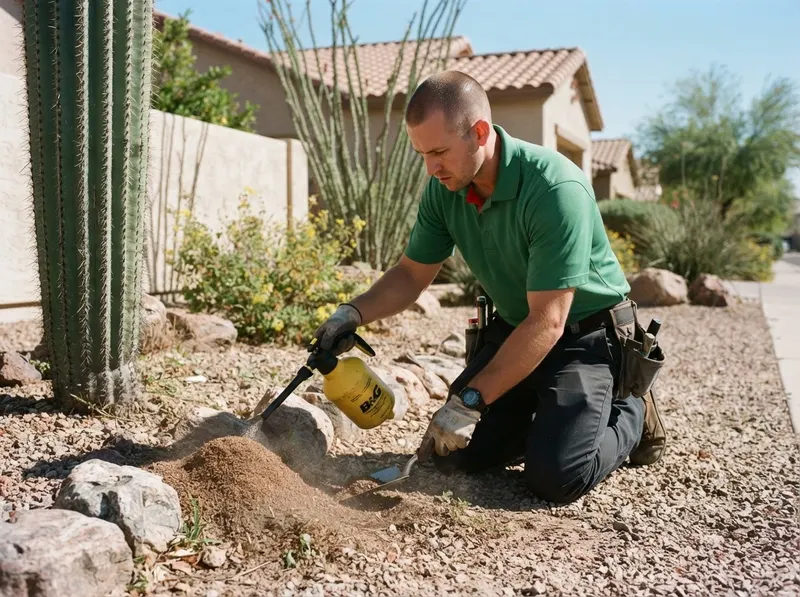
Southern fire ants (Solenopsis xyloni) and desert carpenter ants (Camponotus species) establish complex underground colonies that undermine paver patios, landscape curbing, and perimeter structural slabs, while carpenter ants hollow out damp structural timber framing near leaking irrigation bibbs or roof gutters to build satellite nests. Field treatments avoid non-targeted repellent sprays that cause colony splitting or budding, utilizing targeted granular bait matrices formulated with species-specific metabolic inhibitors and insect growth regulators placed along established foraging trails. Outside the structural footprint, high-volume localized drenches penetrate deep into central brood chambers to eliminate reproducing queens. Interior void dusting targets active electrical boxes and plumbing chases where ants navigate insulated conduits, securing structural framing from moisture-seeking ant colonies.
Get a quote →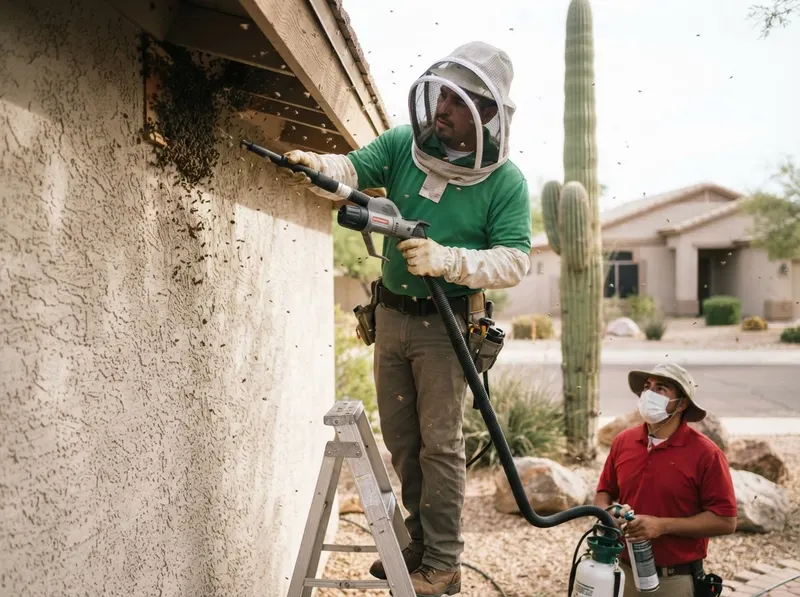
Aggressive Africanized hybrid honeybees (Apis mellifera scutellata) and desert paper wasps regularly colonize residential structural cavities, chimney flues, shed eaves, hollow parapet block walls, and plastic irrigation control boxes across the Phoenix basin. Africanized colonies defend their hive sites aggressively when disturbed by power mowers or structural vibrations, creating acute safety hazards for children and household pets. Certified technicians perform rapid, protective knockdown treatments utilizing specialized high-pressure aerosol contact agents and chemical dusts directly into the entry aperture. Following colony neutralization, all accessible structural honeycomb, brood comb, and wax stores are physically extracted to prevent hive melting, foul-odor emissions, drywall structural staining, and secondary infestations from carpet beetles, wax moths, and field mice, with voids sealed using galvanized flashing.
Get a quote →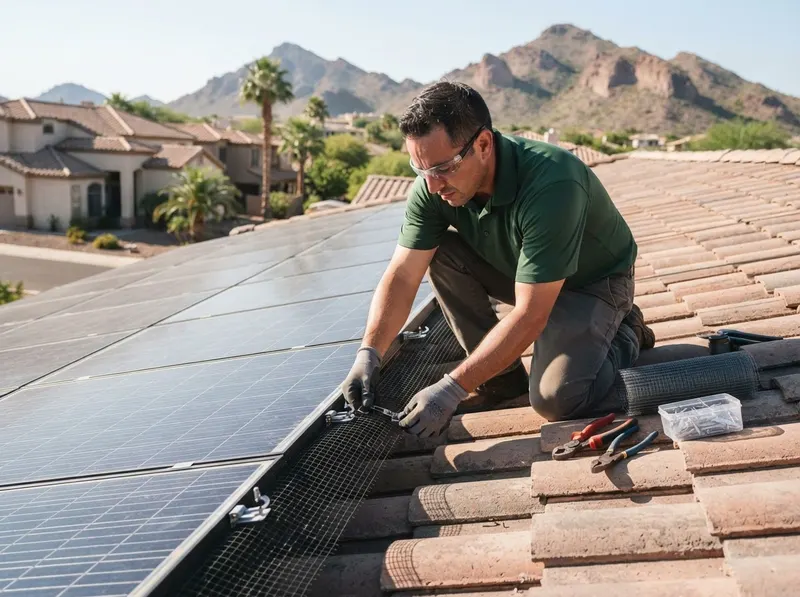
Feral rock pigeons (Columba livia) find shelter beneath rooftop solar panel arrays across Phoenix neighborhoods, exploiting the shaded microclimate to nest safe from aerial predators and intense daytime heat. Accumulated bird guano carries fungal spores, attracts parasitic bird mites into attic insulation, and corrodes wiring harness assemblies and photovoltaic cell surfaces, drastically lowering energy output. Remediation involves pressurized sanitation of roofing tiles beneath and around the mounting racks, targeted bio-disinfection of biological waste deposits, and the structural installation of heavy-duty, weather-resistant galvanized steel wire mesh fastened directly to the solar panel exterior frames using specialized non-penetrating aluminum tension clips that preserve existing solar manufacturer equipment warranties.
Get a quote →You get a firm, itemized quote for your pest control service before any work begins, no surprises, no pressure.
Careful prep, tidy work, and a full cleanup when we are done. We treat your home and belongings like our own.
The same trusted, background-checked team from the first call to the final check.
Selecting the correct structural treatment protocol across the Phoenix metropolitan basin depends directly on structural foundation architecture, targeted pest biology, and immediate seasonal pressure shifts throughout the Sonoran Desert. Homeowners facing sudden indoor sightings must determine whether immediate chemical knockdowns or permanent structural exclusions represent the appropriate allocation of resources. If nocturnal bark scorpions, black widows, or desert recluse spiders are actively observed traversing interior baseboards, bathroom tile, or nursery walls, property owners should choose an immediate intensive interior dust injection paired with an exterior microencapsulated synthetic pyrethroid barrier and mechanical weep-screed exclusion.
If mud exploration tubes or wood-colored fecal pellets appear along exterior concrete stem walls, drywall headers, or subfloor joists, property owners must select a targeted non-repellent liquid soil trench treatment or high-precision slab injection rather than topical surface sprays. When tree canopies and mature landscaping harbor agile rodent populations that drop onto roofing assemblies, attic trapping arrays paired with rigid wire-mesh dormer sealing provide the only lasting resolution. The fundamental trade-off centers on application permanence versus upfront mechanical disruption: chemical exterior liquid barriers dry within 60 minutes, leave no visible structural alterations, and neutralize active crawling vectors immediately, yet they undergo natural ultraviolet degradation that requires recurring maintenance renewals every 60 days to prevent chemical gaps; conversely, full physical exclusion, foam stem-wall sealing, and galvanized mesh installations demand substantial upfront labor, precise mechanical modifications around foundation weep screeds, and initial capital investment, but they eliminate insect entry vectors permanently without relying continuously on active chemical residues.
Every project gets a firm, written price after a free on-site visit. Ranges below for orientation.
Tell us about your pest control service job and we'll send a clear, written quote, usually the same day. Or just call and talk to a real Phoenix pro.
(833) 435-4241
Phoenix structural pest pressures are heavily governed by the unique geographical collision of municipal irrigation networks, hardpan caliche soil layers, and proximity to regional mountain preserves. Properties situated adjacent to South Mountain Park and Preserve or Camelback Mountain face relentless, year-round bark scorpion migrations traveling along interconnected dry-stacked cinder block walls that run throughout suburban subdivisions. Conversely, flood-irrigated properties in Arcadia and North Central Phoenix cultivate elevated subterranean humidity and saturated soil conditions that dramatically accelerate subterranean termite colonies while feeding massive citrus-grove canopies that provide natural foraging corridors for aerial roof rats. Throughout the Willo Historic District and older Encanto Village homes, aging crawlspaces and red-brick foundation stem walls lack modern physical barriers, allowing desert subterranean termites direct access to structural timber without encountering chemical defenses. Farther north in Desert Ridge and the elevated foothills of Ahwatukee, newly excavated desert caliche calms native insect activity initially, but rapid development drives subterranean colonies directly into residential slab perimeters. Standard consumer-grade chemical treatments fail rapidly across Maricopa County due to high ultraviolet indices and sustained summer thermal loads; lasting structural pest control requires heavy-density microencapsulated chemistry, physical foundation exclusion, and subterranean injection methodologies engineered specifically to endure harsh Sonoran Desert conditions.
Free estimates for Phoenix & the surrounding area.
 Copper Cactus Pest Control