Indian house crickets (*Acheta domesticus*) and giant desert centipedes (*Scolopendra heroes*) thrive in the microclimates created by Phoenix landscape irrigation and masonry block walls. In neighborhoods like Desert…
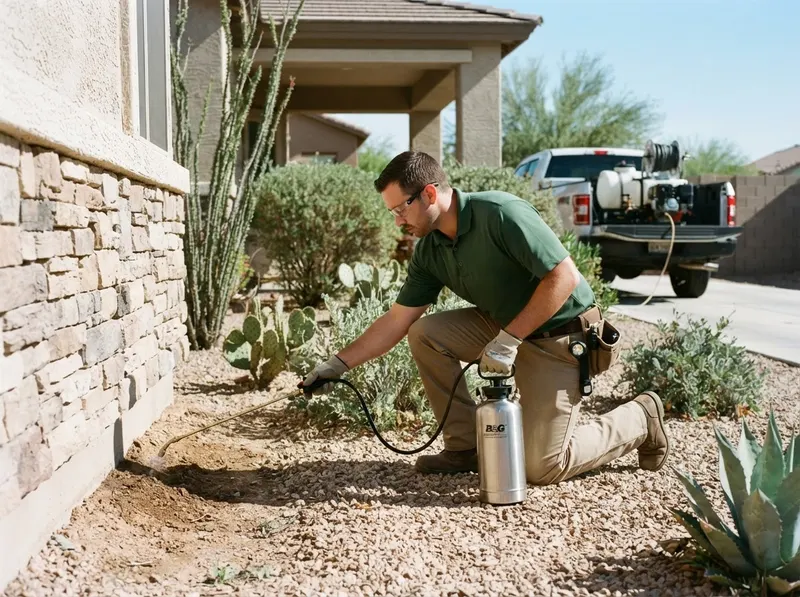
Indian house crickets (*Acheta domesticus*) and giant desert centipedes (*Scolopendra heroes*) thrive in the microclimates created by Phoenix landscape irrigation and masonry block walls. In neighborhoods like Desert Ridge and the Ahwatukee Foothills, where residential turf meets raw desert washes, cricket populations explode following the 1.5 inches of rain typical of July and August monsoons. Crickets cluster by the thousands inside subterranean valve boxes, utility chases, and expansion joints. Because crickets constitute the primary food supply for bark scorpions and black widows, failing to suppress a cricket infestation directly invites venomous predators toward baseboards, doorways, and bedroom carpets. Giant desert centipedes follow these same moisture gradients, using unsealed exterior weep screeds to move from perimeter river rock directly into subflooring.
A foundational perimeter defense fits homes experiencing nocturnal sightings, chewed baseboards, or chirping within interior wall voids. Spot-treating baseboards with retail aerosol sprays fails because indoor applications miss the subterranean nests where crickets breed; the trade-off of professional desert defense is an exterior-focused program that halts the food chain outside rather than discharging repeated chemical coats inside living rooms. In historic districts like Willo and Encanto Village, older homes built on raised foundations or featuring retrofitted plumbing require specialized microencapsulated formulations that withstand summer surface temperatures exceeding 140 degrees Fahrenheit. Technicians systematically treat perimeter expansion joints, structural weep screeds, masonry block fence pilasters, and dense ground-cover vegetation such as rosemary or bougainvillea where centipedes take daytime refuge.
Properties in North Central Phoenix, Arcadia, and the Biltmore Area frequently utilize automated drip lines and mature citrus canopies that generate persistent dampness along foundations. For these sites, technicians apply water-resistant synthetic pyrethroid micro-granules into gravel beds up to 10 feet out from the foundation, followed by a low-pressure liquid perimeter barrier 3 feet up the exterior stucco. In Maryvale's slab-on-grade tract homes, settling cracks between concrete patios and rear stem walls are sealed using siliconized, insect-resistant sealants combined with hydrophobic dust treatments inside dry-utility access boxes. All applications dry completely within 45 to 60 minutes under Sonoran sun conditions, at which point the residual barrier binds tightly to masonry surfaces and remains stable against ultraviolet degradation for up to 90 days without exposing household pets.
Every job gets a firm, written price after a free on-site visit.
Tell us about your cricket and centipede desert defense job in Phoenix and we'll send a clear, written quote, usually the same day.
 Copper Cactus Pest Control