Western black widows (*Latrodectus hesperus*) thrive across Maricopa County because cinder-block fence mortar joints, dry utility meter enclosures, and shaded patio recesses provide optimal thermal retreats from…
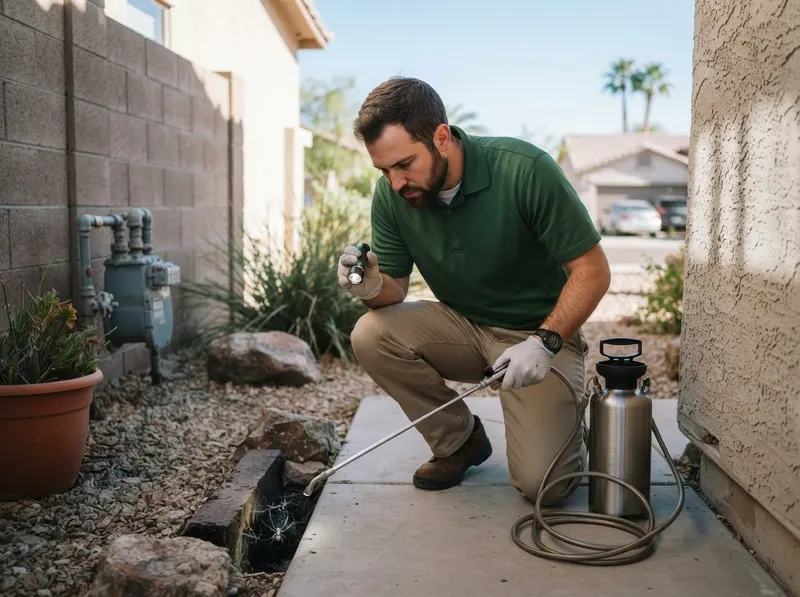
Western black widows (*Latrodectus hesperus*) thrive across Maricopa County because cinder-block fence mortar joints, dry utility meter enclosures, and shaded patio recesses provide optimal thermal retreats from sustained 115-degree summer temperatures. In mature neighborhoods like Arcadia and North Central Phoenix, dense irrigation lines and deep citrus leaf litter provide abundant insect prey, creating persistent population corridors right up to door thresholds. Conversely, in open-desert interface zones such as Desert Ridge and the Ahwatukee Foothills, natural arroyos funnel wandering desert spiders into garage slab edges and cool weep screeds. A spider treatment differs fundamentally from a general insect spray because spiders do not groom their tarsi, meaning standard contact sprays rarely absorb through their thick cuticle; successful management requires direct physical disruption of maternal funnel webs, mechanical crushing of silken egg sacs containing 200 to 400 spiderlings each, and targeted silica or microencapsulated applications inside the hollow void spaces where these web-builders wait for crickets and beetles.
For property managers and homeowners handling historic crawlspaces in the Willo Historic District or block constructions throughout Maryvale and Encanto Village, choosing specialized spider management over a basic perimeter rinse is the critical tactical decision. A general exterior liquid treatment deposits a short-lived surface film that desert sunshine degrades in 14 to 21 days, whereas comprehensive desert spider protocols combine delta-dusting inside exterior block wall cavities with physical den destruction using extended vacuum poles. If a residence shows webs strictly on external block fences away from the living footprint, an exterior-only mechanical web sweep combined with structural perimeter shielding is sufficient; if juvenile widows or egg casings appear along interior baseboards, bathroom plumbing collars, or under low patio furniture, complete internal room treatments paired with weep-hole seals are necessary. The primary limitation to note is that dust applications inside dry exterior weep voids remain stable for up to 90 days, but heavy unchanneled monsoon washouts across gravel yards require a follow-up inspection to re-establish exterior ground barriers.
Every job gets a firm, written price after a free on-site visit.
Tell us about your black widow and desert spider management job in Phoenix and we'll send a clear, written quote, usually the same day.
 Copper Cactus Pest Control